

25 Oct
2026
A dryer can crack a graphic tee, even on low heat. If you’re wondering how to keep graphic tees from cracking in the dryer, the safest option is to air-dry them. If you need to use a machine, turn the shirt inside out and choose the lowest heat setting. Heat can still damage the print.
A favorite tee deserves more than a rushed tumble. Small care choices can help protect its print and fabric. The U.S. Environmental Protection Agency recommends hang-drying clothes instead of using a dryer. Here’s how to apply that advice to graphic tees.
Learn how heat, over-drying, detergent, washing habits, and air-drying affect printed shirts. Then follow a simple routine to help your favorite designs stay bold, comfortable, and ready to wear.
Yes. Dryer heat can crack a graphic print and shrink fabric, even on low heat. Reduce the risk by washing the tee inside out in cold water on a gentle cycle, then air-drying it. If you use a dryer, choose its lowest heat setting.
After washing, hang the shirt or lay it flat to avoid dryer heat. Keep the print from pressing against a rough surface and the tee away from direct heat. Air-drying avoids the hot tumbling that can stress a print and shrink fabric. The U.S. EPA recommends hang-drying clothes instead of using a dryer.
For example, move a washed tee straight to a drying rack. Lay it flat if a hanger could stretch the shoulders or body. Air-drying takes longer than a dryer cycle, but avoids heat-related wear.
If you need to machine-dry the tee, turn it inside out and select the lowest heat setting. Check the controls before starting; a short cycle doesn’t necessarily mean low heat. Even at a low setting, heat can damage the print, so this only minimizes exposure, not eliminates it.
Keep the shirt separate from heavy items that could press or rub against the print. When the cycle ends, take the tee out instead of starting another round. If it still feels slightly damp, let it finish drying in the open air.
Check the print before drying. If it’s already cracked, peeling, or lifting at the edges, avoid dryer heat, which could worsen the damage. Handle the tee gently to limit further wear. Don’t iron directly over the design. If ironing is necessary, turn the shirt inside out and use low heat.
Don’t leave a printed shirt in a hot environment or in the dryer after the cycle ends. Heat and prolonged tumbling can stress the design and fabric. For a practical routine, move the tee from the washer to a rack, smooth the fabric, and let it dry naturally.
Detergent choice matters because harsh chemicals can weaken ink and adhesives. Follow these steps to clean the fabric without putting unnecessary stress on the print.
Measure detergent according to the label and load size. Extra soap doesn’t mean extra care; residue can remain on the fabric. For a small load, use an amount suited to that load rather than a full-load measure.
Keep bleach and strong stain treatments away from printed areas. For a small mark, use a mild cleaning approach on the fabric rather than an aggressive chemical on the design. For example, carefully treat a stain on an unprinted hem, then wash the tee with gentle detergent.
Before washing, read the garment-care label and detergent directions. If the label calls for a gentle wash, choose that cycle and wash the printed shirt with similarly lightweight garments. Keep the routine simple: check the labels, measure detergent for the load, and skip softener.
After washing, check for leftover suds or a soapy feel. If detergent remains, rinse the garment again rather than adding softener to mask the residue. Then choose your drying method. Good care comes down to small decisions: mild detergent, no bleach or softener, and a measured dose.
Yes. Turn graphic tees inside out before washing and drying to reduce rubbing on the printed surface. Follow the care label for washing, water temperature, and drying so the fabric and design receive suitable care.
Use the same approach before drying. The print faces inward, reducing rubbing against other garments as the load moves. This everyday habit can help reduce wear, though it can’t repair cracks that have already formed.
Separate graphic tees from towels and other heavy laundry. Wash a tee with lighter garments to reduce abrasive contact with the print. This careful load setup can help protect the design without adding complicated steps to your routine.
Manufacturing can also affect a print’s durability. Poor curing during production can contribute to early cracking, and home washing can’t correct that. Still, turning the shirt inside out limits rubbing against the print and helps prevent avoidable wear during routine care.
After washing, check the design before deciding how to dry the tee. Keep it inside out to reduce contact with other surfaces, and avoid pulling or stretching the print while it’s wet. Small choices repeated with each wash can help protect shirts you wear every day.
There’s no single tumble-dry time for every graphic tee. Remove the garment while it’s slightly damp. Fabric, load size, and machine settings all affect how quickly it dries.
For example, if the body feels dry but a thicker seam is still damp, take the shirt out and let the seam finish drying naturally. Don’t automatically run another full cycle. The print and fabric are exposed to heat for as long as the dryer runs.
Check the machine’s setting before starting. A short cycle isn’t necessarily a low-temperature cycle; the heat level matters. If the garment feels hot when you take it out, let it cool away from other warm laundry, then finish drying it in the open air.
Avoid piling warm shirts together while they’re damp. Separate the garment so air can reach the fabric, and don’t press the print against another warm item. This reduces trapped heat and prolonged exposure for the ink and any adhesive layers.
Use a gentle hanger or lay the shirt flat while it finishes drying. Avoid stretching the neckline over a narrow hanger, and don’t fold the damp print against itself. Once dry, keep the shirt away from warm appliances and direct sunlight to protect its color and design.
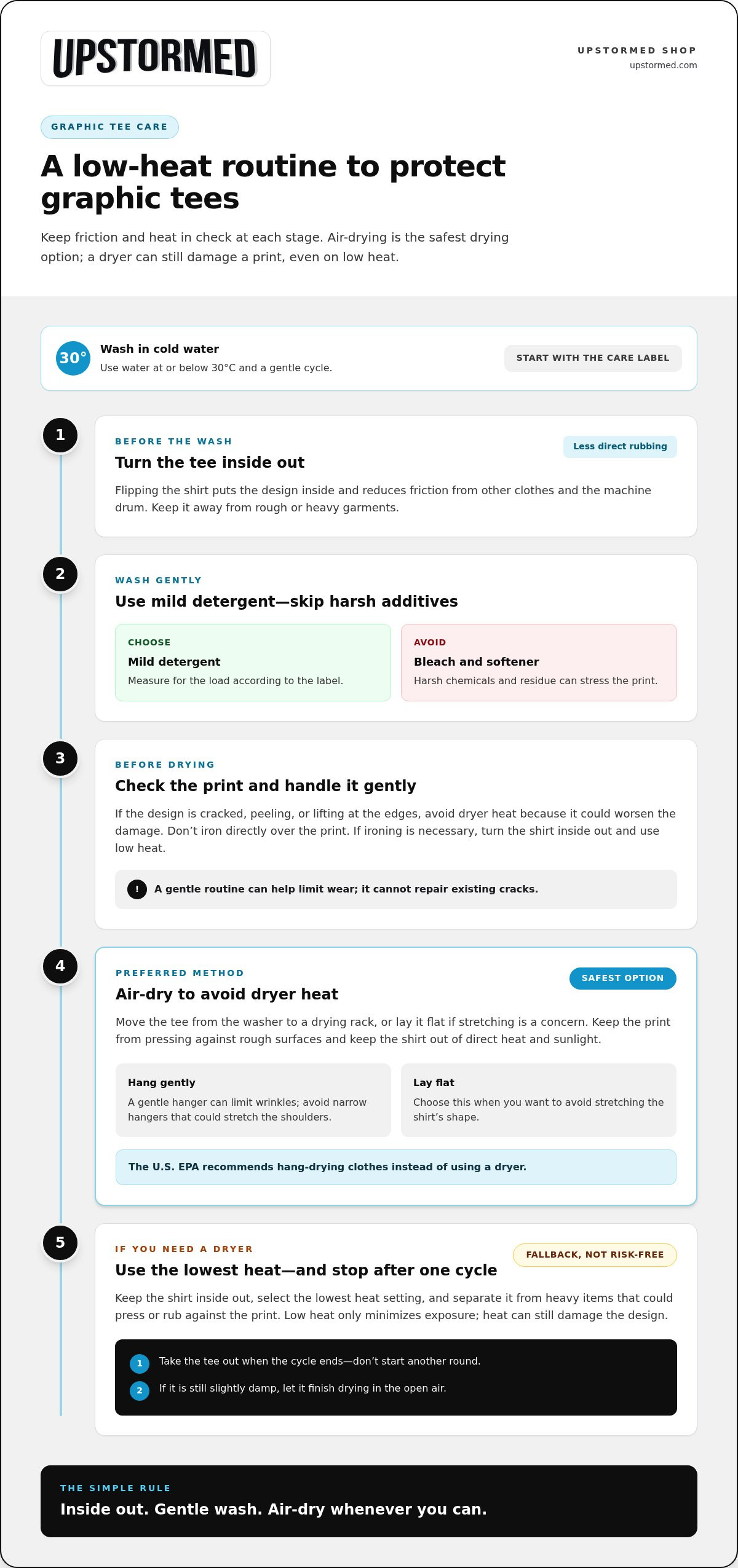
Air-drying gives a printed shirt a break from dryer heat. One reliable way to keep graphic tees from cracking in the dryer is to skip the dryer when possible. Prepare the damp garment, choose a suitable drying surface, and keep it out of direct sunlight.
If the fabric feels soapy, rinse it before drying. Detergent residue can linger in the fibers, so make sure the rinse water runs clear. Mild detergent and a cold-water wash can make this step straightforward without adding dryer heat.
For a sturdier shirt, use a gentle hanger and position the shoulder seams carefully. Avoid thin wire hangers that can leave bumps or distort the shape. Check the neckline and sleeves as the fabric settles, and adjust the shirt before it dries in place.
Leave space between garments so damp clothes aren’t pressed together. If a tee hangs beside a heavy, wet towel, move it elsewhere. Extra room reduces contact and helps the shirt dry evenly instead of staying damp where fabrics overlap.
If you’re deciding how to keep graphic tees from cracking in the dryer, make air-drying your routine, not a last resort. Keep the rack ready, wash only when needed, and avoid leaving the garment in a warm machine. If you’re refreshing your everyday apparel, explore women’s apparel for another look to wear and care for thoughtfully.
Upstormed Shop offers clothing to help you build a look that feels like you. After learning how to care for printed tees, pair your everyday style with Ripped Slimming Jeans For Women or explore other apparel options. The collection also includes a Sexy See-through Hollow Beach Dress for Women, Yoga Fitness Leggings Women Pants Fitness Slim Tights Gym Running Sports Clothing, and Beach Bikini High-end Fashionable Solid-color Swim Trunks.
Choose the piece that fits your next outfit and your own sense of expression. Visit Upstormed Shop to explore the available styles.
Your favorite clothes hold memories, moods, and meaningful moments. Make caring for them part of how you show up for yourself. A steady routine is how to keep graphic tees from cracking in the dryer while giving go-to pieces thoughtful care. Choose what feels like you, and let your style move with you.
When you’re ready to refresh your wardrobe, Upstormed Shop offers Ripped Slimming Jeans For Women, a Sexy See-through Hollow Beach Dress for Women, and Yoga Fitness Leggings Women Pants Fitness Slim Tights Gym Running Sports Clothing. Find pieces for different plans and different sides of your style. You don’t need to wait for a special occasion to express yourself.
Visit Upstormed Shop to explore styles that speak to you. Keep caring for what you love, keep choosing what feels true, and step into what comes next with confidence.
Yes, print type and design can affect how a graphic wears. Large, solid areas of ink may crack more readily over time than designs with less continuous coverage. Screen printing is known to last longer than direct-to-garment or heat-transfer printing when the design allows. Whatever the print type, friction, heat, and stretching can still stress the design.
Handle a peeling print gently, and don’t pull at loose sections. Loose edges can be carefully trimmed, while minor cracks may be addressed with touch-ups. Heat-applied transfers are another repair option, but added heat can also affect a print, so work carefully and avoid pressing directly onto the design. If the graphic is badly damaged, gentle washing and drying can slow further wear, but won’t restore the original print.
Air-drying is the better choice for reducing heat exposure to a graphic tee. Lay a delicate shirt flat if hanging it could stretch the shoulders, and keep it out of direct sunlight to limit fading. If you need to use a dryer, reduce heat exposure and take the shirt out before it’s fully dry. Choose the method that protects both the print and the garment’s shape.
Fabric softener can leave residue that affects print longevity, so skip it when washing graphic tees. Dryer sheets aren’t needed to protect the design; leaving them out is a simple precaution. Wash a printed shirt with mild detergent and avoid adding softener to the dispenser. Keeping extra laundry products away from the print helps prevent unwanted residue.
Heat and repeated tumbling can stress the bond between ink and fabric, making a print more likely to crack or peel. Over-drying adds unnecessary heat, while rubbing against other laundry can wear the design. A shirt left tumbling after it’s dry continues to face heat and friction. Production factors, including poor ink curing, can also contribute to early cracking.
Use gentle care for both, and follow the garment’s care label. Print methods differ, but heat and friction can affect printed areas across garment types. Screen printing is known to last longer than direct-to-garment or heat-transfer printing when the design allows, but it still shouldn’t be exposed to harsh drying. For a shirt with a heat-transfer design, avoid direct heat on the print and handle it gently.

Article by
Jonathan Anthony Burkett
Jonathan Anthony Burkett was born in 1987. He is a bright writer inspired by many, as he continues to struggle in life. Devoted for achievement in his lifetime, he is willing to take any test. He told himself, that he would never give up no matter the trials and tribulations. He decided to write to help him move towards a bright future for himself; and because he knows that s what his Grandparents want for him.
Learning now that life is a challenge for many, with trials, tribulations, brutality, hatred, along with grief and manipulation. Jonathan is writing now to release his thoughts about life, after being motivated, inspired to prosper, encouraged to tolerate, uplifted, and empowered from his past.

The October 25 celebration and Parma’s coming industry meetings invite a practical look at the di...

New 2026 passport standards put data integrity and exchange into focus. The practical question is...

ASIFA’s October 28 observance offers a reason to explore animated shorts through their makers, of...

 Account
 Cart